
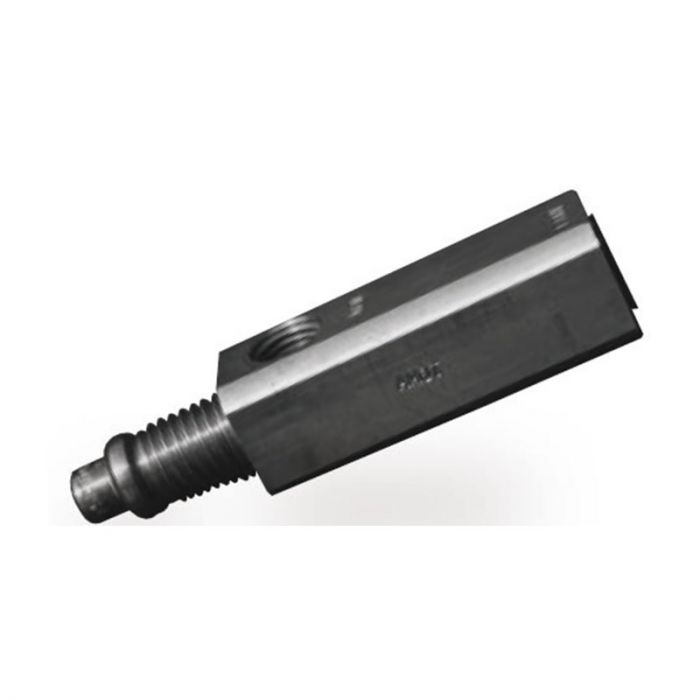
4155A Temperature Sensing Valve
The AMOT 4155A temperature sensing valve provides precise and reliable thermal control for diesel engines and industrial systems where accurate liquid temperature monitoring is critical. Designed as a 2-way temperature control valve, the 4155A operates by venting the sensing medium when a preset temperature is reached, ensuring safe pressure reduction within the control circuit.
Built for use in jacket water, lube oil, and gearbox oil applications, this rugged valve features a wax mixture sensing element for fast response and repeatable accuracy. With an adjustable temperature range from 16°C to 120°C (61°F to 248°F) and durable brass construction with Viton® seals, it offers long-term reliability and minimal maintenance in demanding environments.
For a complete system solution, pair this valve with our Thermostatic 2 Way Control Valves to achieve consistent temperature regulation and enhanced engine safety.
Key Features & Benefits
- Fast-acting wax mixture sensor ensures accurate temperature response
- Adjustable temperature range: 16°C–120°C (61°F–248°F)
- Simple installation with ⅜” NPT or BSP threads
- Low-maintenance design for long service life
- PED/PE(S)R and ATEX/UKEX certified for Group 1 & 2 liquids
- Compatible with oil and coolant temperature control applications
- Reliable brass housing with Viton® seals for superior chemical resistance
- Proven performance in industrial and engine shutdown systems
| Adjustable temp. level: | 16°C - 120°C | 61°F - 248°F |
| Max. control pressure: | 7 bar | 100 psi |
| Standard seals: | Viton | |
| Max. element temp. range: | 54°C - 120°C | 129°F - 248°F |
| Max. continuous temp.: | 88°C - 128°C | 190°F - 262°F |
| Net weight: | 0.56 kg | 1 1/4 lb |
| Sensor type: | Wax mixtures | |
| Medium: | Liquids | |
| Housing material: | Brass | |
The temperature sensitive element includes a push rod which rises in response to increasing temperature.
At a predetermined temperature, the valve assembly is lifted from its seating, allowing the sensing medium to vent and reduce pressure within the control circuit.


